
Stateless sessions
Each session starts clean, so continuity has to come from somewhere outside the model.
Termite Protocol lets fresh AI agent sessions pick up real repository work through SQLite signals, atomic claiming, compact .birth snapshots, and cross-session field memory.
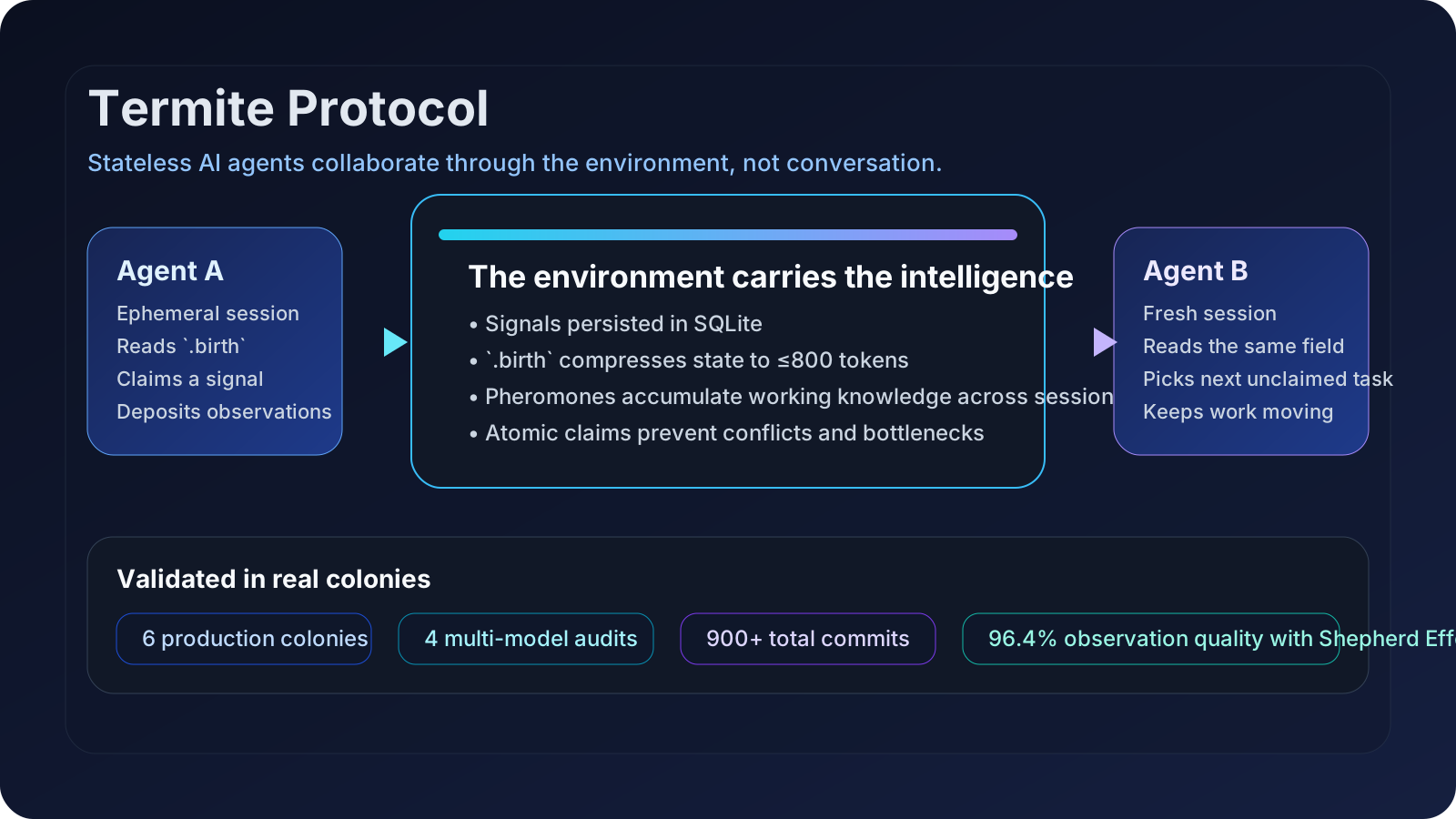
.birth ≤ 800 tokensFresh sessions read an arrival snapshot instead of a giant rulebook.Most AI coding agents are stateless. Every new session risks rediscovering the same structure, repeating the same mistakes, and losing the same design context. Conversation-heavy coordination helps only until context cost, drift, and weaker models start to dominate.
Each session starts clean, so continuity has to come from somewhere outside the model.
Chat-based handoffs paraphrase state again and again, which compounds ambiguity and loss.
Cheaper models often fail at initiating high-quality patterns on their own, especially over multi-turn conversations.
Termite Protocol moves collaboration into the repository environment itself. Instead of preserving continuity through an ever-growing chat log, it writes operational state directly into the field.
Agents do not need to talk to each other. They sense shared state and continue the work.
.birth.birth compresses the current colony state into a compact operational snapshot, so fresh sessions do not reload a 28K-token protocol document.
Strong models can seed patterns that weaker workers follow, improving colony-wide output quality without making every worker equally expensive.
mkdir termite-demo && cd termite-demo
curl -fsSL https://raw.githubusercontent.com/
billbai-longarena/Termite-Protocol/main/install.sh | bash
./scripts/field-arrive.sh
./scripts/field-pulse.sh
sqlite3 .termite.db "select id,status,title from signals;"The protocol has been exercised across real colonies and audit packages, including a Shepherd Effect configuration where one strong model and two weaker workers reached 96.4% observation quality.
Weak models can execute the loop, but they struggle to sustain judgment and structure independently.
One strong model seeds the field, later weaker workers imitate the pattern, and the colony behaves far above weak-only quality.
Scale boosts throughput, but the field still needs mechanisms that prevent dilution and starvation.
Each new agent reads a bounded snapshot, claims work atomically, executes, and writes observations back into the field for the next session.
field-arrive.sh computes .birth from the current colony state.
field-claim.sh atomically claims the next unassigned signal.
The agent completes work using the field snapshot instead of replaying full chat history.
field-deposit.sh leaves observations, decisions, and status for the next worker.
Conversation is not the coordination backbone. The environment is. The repository stores signals, field memory, and recovery hints so the workflow survives session boundaries.
No. The protocol is installable and usable on its own. Automation layers can sit on top later, but they are optional companions, not prerequisites.
No. It makes strong models more leverageable and weaker models more usable inside the same field.
The site is still intentionally lightweight, so the fastest path is email. Pick the path that matches your intent and tell us what you want to build with Termite Protocol.
Subscribe for new releases, audit takeaways, and fresh patterns for cross-session collaboration.
Join newsletterJoin the waitlist if you want pilot updates, onboarding availability, or a heads-up on the next ecosystem rollout.
Join waitlistUse this for partnerships, production questions, research collaboration, or anything that needs a real conversation.
Email BillRun the smoke test, inspect the audit materials, and stress the assumptions in a real repository. The fastest path is the repo itself; the strongest proof is still skeptical field use.